
Technology
Afrobeats Boom: Nigeria Risks Losing Billions Over Weak IP Protection
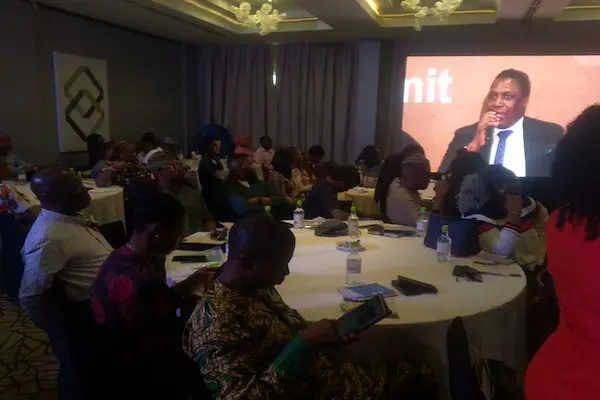
Nigeria’s growing global cultural influence may not translate into corresponding economic value if the country fails to strengthen its intellectual property, rights management and distribution infrastructure, stakeholders in the creative industry have warned.
The concern was raised at the QED Creative Presentation Summit in Lagos, where industry experts argued that Nigeria’s global success in music and other creative exports has not been matched by the development of domestic systems capable of retaining a significant share of the resulting economic value.
Speaking at the summit, Steve Babaeko, Chief Executive Officer and Chief Creative Officer of X3M Ideas, used the global rise of Afrobeats to illustrate the gap between cultural visibility and economic value capture.
Babaeko argued that Nigeria has achieved considerable soft power through its music, entertainment and culture but continues to struggle with the enforcement of intellectual property rights.
“IP laws, but how do we enforce them? We are not doing that,” he said.
He cited Nigerian singer Burna Boy’s participation in the opening and closing ceremonies of the 2026 FIFA World Cup as an example of the country’s growing international cultural influence.
Babaeko also referenced the reported interest of the Los Angeles County Museum of Art, which he said sought a Nigerian dance performance for its opening, to demonstrate the international demand for Nigerian cultural expressions.
However, he argued that such visibility would have limited economic impact for Nigeria if the country lacked the systems required to protect, commercialise and retain value from its cultural exports.
His concerns were reinforced by Omotayo Inakoju, Head of Legal at EbonyLife Group, who examined the issue from the perspective of rights management and ownership.
Inakoju said major components of Nigeria’s music industry infrastructure, including labels, distribution and rights administration, remain significantly dependent on foreign-owned systems.
She noted that some of the biggest financial opportunities available to Nigerian artistes, including recording advances, are often tied to agreements with international record labels such as Def Jam.
She also observed that the economics of touring currently make international performances more attractive to many Nigerian artistes than building an extensive domestic touring infrastructure.
According to her, the situation reflects a broader dependence on external infrastructure to support the commercial success of Nigerian creative products.
“We’re using exported infrastructure to achieve the soft success that we have now,” she said.
The stakeholders said Nigeria’s next challenge was therefore not simply to produce globally successful music, films and other creative works, but to build the legal, financial and commercial infrastructure required to ensure that more of the value generated by those works remains within the country.
They stressed that stronger intellectual property enforcement, domestic rights-management systems and investment in creative-industry infrastructure would be critical to converting Nigeria’s cultural influence into sustainable economic gains.














NYSC to Open Online Registration Portal for 2026 Prospective Corps Members in September

Again Residents Confront Scavenger Over Alleged Vandalism in Kosofe

GBB Reaffirms Digital Infrastructure Drive

Nigeria to Roll Out Unique Postcodes for Every Home October 1
