
Politics
Makinde Promises Tax Reform, Unveils Four-Point Plan for Nigeria
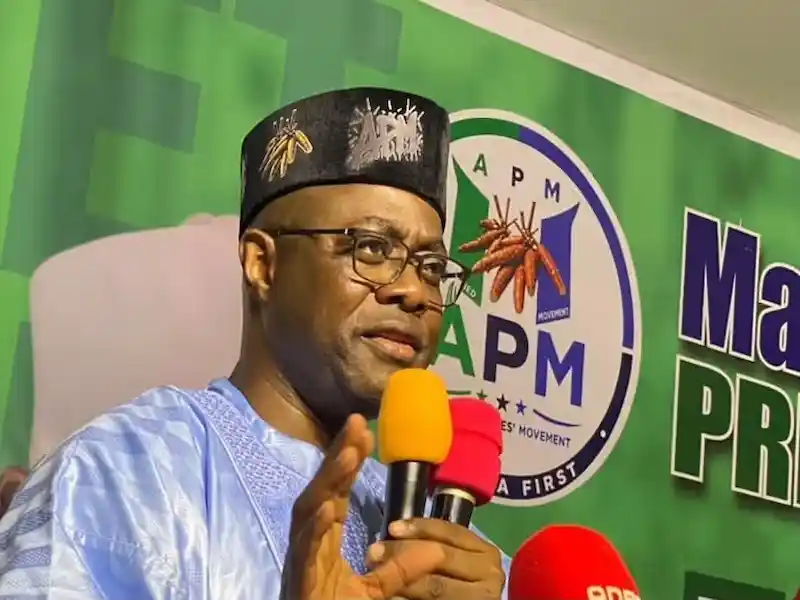
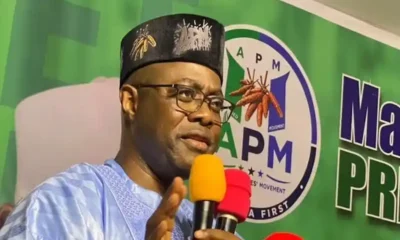
The presidential candidate of the Allied Peoples Movement, Seyi Makinde, has promised to overhaul Nigeria’s tax system and shift the burden away from poor Nigerians as part of his proposed plan to reset the country.
Makinde, who is also the governor of Oyo State, unveiled the four-point agenda during the APM presidential campaign town hall meeting in Uyo, Akwa Ibom State.
The agenda focuses on the economy, education, security and Nigeria’s socio-political structure.
Makinde said his economic plan would prioritise wealth creation, entrepreneurship, private investment and job creation rather than relying heavily on federal allocations.
He said the proposed tax reforms would ensure that wealth, rather than poverty, is targeted, while businesses would receive incentives to expand and employ more Nigerians.
“We will reset our economy. We will no longer keep waiting for handouts that they call federal allocation,” Makinde said.
On education, the APM candidate said his administration would focus on improving access to quality education, strengthening foundational learning, improving teacher quality and expanding technical and vocational education.
He also expressed concern over the number of children outside the school system, saying reliable data would be needed to track enrolment, retention and learning outcomes.
On security, Makinde said Nigeria needed to move beyond responding to attacks after they occur and place greater emphasis on intelligence gathering, early warning systems, prevention and stronger cooperation between communities and security agencies.
He also promised to tackle insecurity in the Niger Delta through youth empowerment and measures aimed at addressing environmental degradation in the region.
The fourth pillar of the agenda centres on Nigeria’s socio-political structure, with Makinde advocating clearer responsibilities among the Federal Government, states and local governments.
He argued that Nigeria needed a stronger form of federalism in which responsibilities were assigned to the level of government best positioned to deliver them.
The governor also linked local government autonomy to broader questions surrounding Nigeria’s federal structure, including the responsibilities, resources and accountability mechanisms of each tier of government.
Makinde said the four areas were interconnected, arguing that insecurity could undermine investment and agriculture, poor education could weaken the workforce, while economic hardship could worsen poverty and insecurity.
He said his proposed reset would therefore focus on addressing the problems together rather than treating them as isolated challenges.









NYSC to Open Online Registration Portal for 2026 Prospective Corps Members in September

Again Residents Confront Scavenger Over Alleged Vandalism in Kosofe

GBB Reaffirms Digital Infrastructure Drive

Nigeria to Roll Out Unique Postcodes for Every Home October 1
