
Technology
Africa Must Become a Creator of Technology, Not Just a Consumer — Cardoso
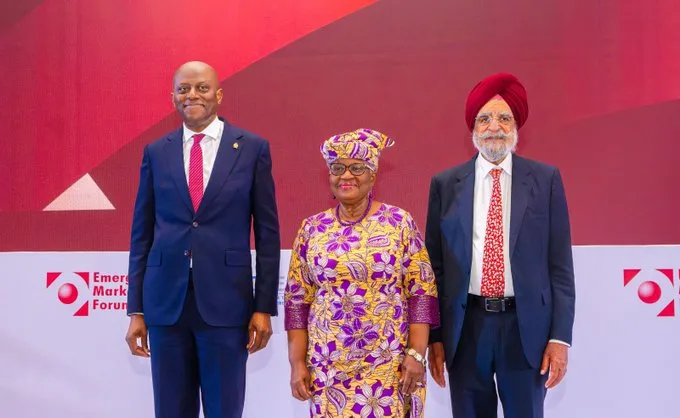
Governor of the Central Bank of Nigeria (CBN), Olayemi Cardoso, has called on African nations to shift from merely consuming technology to creating homegrown innovations capable of solving the continent’s unique challenges and competing globally.
Cardoso made the call while speaking at the 7th African Emerging Markets Forum (AEMF 2026) held at the Central Bank of Nigeria headquarters in Abuja.
Speaking during a fireside dialogue with the Director-General of the World Trade Organization (WTO), Dr. Ngozi Okonjo-Iweala, the CBN governor said Africa’s future prosperity depends on its ability to develop indigenous technologies and empower entrepreneurs to commercialise innovative solutions.
“For Africa, we must move beyond being consumers of technology. We must become creators, developing African solutions to African challenges and building businesses capable of taking those solutions to the world,” Cardoso said.
He also stressed the importance of investing in Africa’s youth and ensuring greater inclusion of women in the continent’s economic transformation, particularly as artificial intelligence reshapes global industries.
“We must prepare young Africans for an AI-enabled economy and unlock the full economic participation of women, because Africa cannot fly with one wing. Our goal must be an Africa in which young entrepreneurs can build, scale and compete without having to leave the continent,” he stated.
Cardoso noted that restoring orthodox central banking practices has been instrumental in stabilising Nigeria’s banking system, exchange rate, and broader macroeconomic environment.
According to him, reforms implemented by the apex bank have strengthened confidence in the financial system while laying the foundation for sustainable economic growth.
The CBN governor further stated that Nigeria’s foreign exchange market now operates under a more transparent framework, with improved liquidity and significantly reduced dependence on direct intervention by the Central Bank.
He explained that the ongoing reforms are aimed at creating a more efficient and market-driven foreign exchange system capable of attracting investment and supporting long-term economic stability.
Cardoso also reflected on the evolution of the Central Bank’s role, noting that several fiscal responsibilities previously assigned to the institution came at a considerable cost, reinforcing the need to maintain a clear focus on its core monetary policy mandate.



NYSC to Open Online Registration Portal for 2026 Prospective Corps Members in September

Again Residents Confront Scavenger Over Alleged Vandalism in Kosofe

GBB Reaffirms Digital Infrastructure Drive

Nigeria to Roll Out Unique Postcodes for Every Home October 1
