
Business
Obi Slams Tinubu Government Over US Investment Warning, Questions Economic Stability Claims
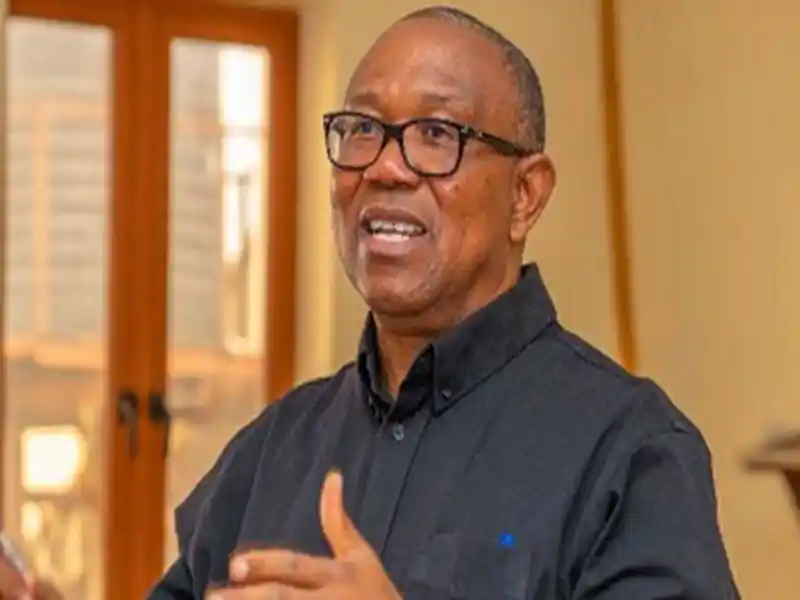
Peter Obi, presidential candidate of the Nigeria Democratic Congress (NDC), has criticised the administration of President Bola Ahmed Tinubu over reported warnings by the United States government about investment risks in Nigeria, arguing that the concerns raise questions about the government’s claims of macroeconomic stability.
Obi’s criticism follows the reported 2026 Nigeria Investment Climate Statement of the US Department of State, which identified corruption, insecurity, inconsistent regulatory enforcement, weaknesses in the judicial system, port congestion and electricity challenges as factors undermining investor confidence in Nigeria.
The report also reportedly cautioned prospective American investors about the potential use of arbitrary detention, travel restrictions and immigration enforcement in commercial or regulatory disputes involving foreign businesses.
Reacting to the concerns, Obi faulted the All Progressives Congress (APC)-led administration, arguing that a government committed to effective economic management should respond promptly to such an assessment by investigating the issues raised and implementing measures to improve Nigeria’s investment climate.
He maintained that Nigeria’s economic potential, large domestic market and abundant resources should make the country an attractive destination for foreign direct investment (FDI), but that persistent governance and infrastructure challenges continue to undermine its ability to attract long-term productive capital.
The quoted passage from the reported US assessment warned that routine business trips could escalate into detention where a company faces regulatory suspicion or charges from Nigerian authorities. It also referred to allegations of coercive exit bans and arbitrary detention in commercial or regulatory disputes involving multinational firms.
Such concerns, if substantiated, could affect investor confidence by increasing uncertainty about the legal protections available to foreign businesses operating in Nigeria.
The report also highlighted persistent inefficiencies at the country’s seaports, noting that although the Lekki Deep Seaport, which opened in 2023, reportedly handled $9.6 billion in trade in 2025 while operating at approximately 50 percent capacity, traditional ports in Apapa and Tin Can Island continued to experience significant cargo delays.
Cargo dwell times at the older ports reportedly exceeded 20 days because of manual examination procedures, increasing costs for importers, manufacturers and other businesses. Persistent electricity supply challenges were also identified as an obstacle to investment and business expansion.
Obi’s criticism further drew attention to Nigeria’s capital importation figures for the first quarter of 2026, which reportedly stood at $10.37 billion.
According to figures cited in the statement, foreign direct investment accounted for just $135.08 million, representing approximately 1.3 percent of total capital inflows. Foreign portfolio investment (FPI), meanwhile, reportedly amounted to $9.86 billion, accounting for about 95.1 per cent of the total, with other capital streams making up the remainder.
The figures suggest that portfolio investment accounted for the overwhelming majority of reported capital inflows during the period, while direct investment represented a relatively small share.
Unlike portfolio investment, which typically involves financial assets such as shares and debt securities, FDI generally entails longer-term commitments to businesses, production facilities and operational capacity. Such investments can support employment, technology transfer, industrial development and sustainable economic growth.
The relatively low reported share of FDI therefore raises questions about Nigeria’s ability to attract the kind of long-term capital needed to expand productive activity and create jobs, although the composition of capital inflows alone does not establish the reasons behind investors’ decisions.
Obi argued that the government should treat the reported US concerns as a call for urgent action, including stronger institutional accountability, predictable regulatory enforcement, improved judicial processes, better port operations and reliable electricity supply.
He maintained that celebrating macroeconomic stability without adequately addressing the structural problems confronting businesses risks creating a disconnect between official economic claims and the realities experienced by investors.












NYSC to Open Online Registration Portal for 2026 Prospective Corps Members in September

Again Residents Confront Scavenger Over Alleged Vandalism in Kosofe

GBB Reaffirms Digital Infrastructure Drive

Nigeria to Roll Out Unique Postcodes for Every Home October 1
