
National
Obi Faults Tinubu’s Economic Reforms, Says Stability Has Not Reduced Poverty
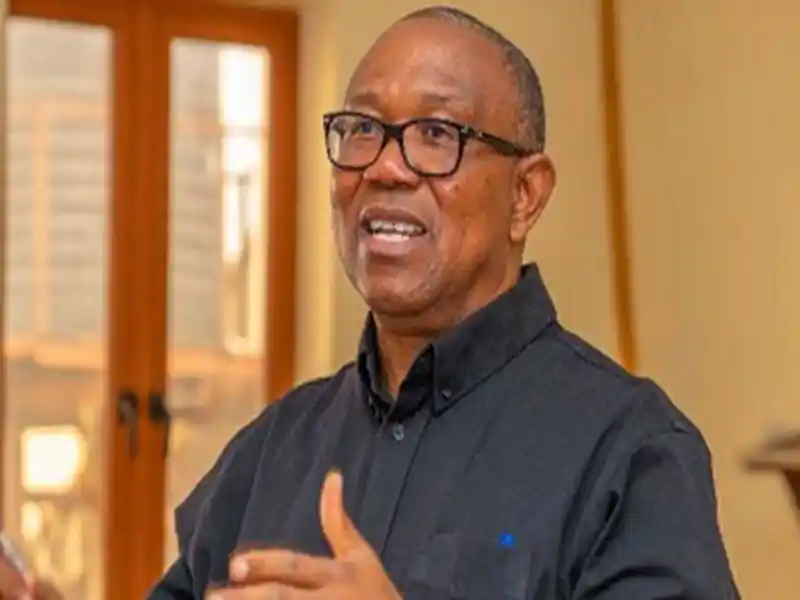
The Nigeria Democratic Congress (NDC) presidential candidate, Peter Obi, has criticised President Bola Tinubu’s economic policies, arguing that improvements in some economic indicators have not translated into better living conditions for Nigerians.
Obi said economic growth and increased government revenue should not be celebrated as signs of success while millions of citizens continue to struggle with poverty, unemployment and rising living costs.
The former Anambra State governor made the remarks in a statement titled “Celebrating Microeconomic Stability Amidst Increasing Poverty,” in which he reacted to a World Bank report on Nigeria’s economic performance.
He argued that economic reforms should be assessed based on their impact on citizens’ welfare, particularly their ability to afford food, access healthcare and provide education for their children.
“An economy is not truly stabilized simply because government revenue increases, foreign reserves strengthen, or GDP grows. Stability exists when citizens can afford food, obtain healthcare, provide education for their children, and live with dignity,” Obi said.
He questioned the benefits of increased government revenue to households struggling to meet basic needs, insisting that economic progress must reflect improvements in the daily lives of ordinary Nigerians.
Citing the World Bank report titled Beyond the Federal Purse: How Higher Revenues Reshaped State Priorities, Obi said the Federal Government spent N7.7 trillion on debt interest payments between January and June 2026, compared with revenue of N6.2 trillion during the same period.
According to him, the reported figures showed that debt servicing exceeded government revenue by approximately N1.5 trillion, raising concerns about the sustainability of the country’s debt obligations despite increased revenue.
Obi also claimed that federal capital expenditure declined by about N700 billion in the first half of 2026, arguing that the government’s spending priorities were limiting investment in infrastructure and other development projects.
He attributed the situation to what he described as excessive borrowing, corruption and poor economic management by the Tinubu administration.
The NDC candidate further cited a United Nations Development Programme report on multidimensional poverty, arguing that the number of Nigerians experiencing deprivation underscored the need to prioritise social welfare alongside macroeconomic reforms.
Obi maintained that government policies should be measured by their ability to create jobs, reduce inequality and lift vulnerable citizens out of poverty, rather than by improvements in headline economic figures alone.
He called on the Tinubu administration to review its reform strategy and place greater emphasis on the welfare of Nigerians, particularly low-income households bearing the burden of rising costs.
“The definitive measure of economic success is not the apparent stability of the economy on paper, but the quality of people’s lives,” he said.
Obi added that Nigeria needed an economy capable of reducing poverty, creating employment opportunities for young people and ensuring that the benefits of economic growth reached citizens across the country.












NYSC to Open Online Registration Portal for 2026 Prospective Corps Members in September

Again Residents Confront Scavenger Over Alleged Vandalism in Kosofe

GBB Reaffirms Digital Infrastructure Drive

Nigeria to Roll Out Unique Postcodes for Every Home October 1
