
Business
CIBN: High Costs, Weak Infrastructure Still Hamper MSME Growt
Micro, small and medium-sized enterprises (MSMEs) remain under pressure from high operating costs, unreliable infrastructure and limited access to markets despite signs of improving macroeconomic stability in Nigeria, the Chartered Institute of Bankers of Nigeria (CIBN) has said.
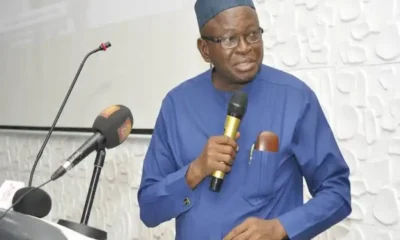
President and Chairman of Council of CIBN, Dr Dele Alabi, stated this on Tuesday at the 19th Annual Banking and Finance Conference in Abuja, where he said the benefits of economic reforms must extend beyond national indicators to businesses and households.
Alabi said Nigeria continued to face external pressures through fluctuations in crude oil and gas prices, rising costs of petrol, diesel, cooking gas and fertiliser, increased freight and logistics expenses, exchange-rate pressures and changes in capital flows.
He, however, noted that measures adopted by the Federal Government and other stakeholders were beginning to produce positive results, particularly through greater coordination of fiscal, monetary and energy policies.
“The good news is that certain policies implemented in the past couple of years are beginning to yield fruit. Likewise, recent indicators show that these efforts are beginning to rebuild confidence,” he said.
Alabi pointed to the National Bureau of Statistics’ (NBS) second-quarter 2026 Gross Domestic Product report and the recapitalisation of 33 banks, which he said had resulted in N4.65 trillion in new capital, as signs of improving stability and investor confidence.
He cautioned, however, that the success of the reforms should ultimately be measured by their impact on Nigerians, including lower living costs, increased employment, stronger incomes, affordable credit and improved public services.
“Macroeconomic progress must therefore be felt at the micro level, in households, small businesses and the daily lives of ordinary Nigerians,” he said.
According to him, MSMEs remain critical to employment, enterprise development and local value creation, but continue to face high operating expenses, poor infrastructure, weak market access, low productivity, skills shortages and slow digital adoption.
He said the next phase of reforms should focus on transferring economic stability from national balance sheets to business balance sheets and household budgets.
President Bola Tinubu, represented by the Minister of Finance and Coordinating Minister of the Economy, Taiwo Oyedele, said the administration had undertaken difficult reforms to address structural weaknesses built up over decades.
Tinubu said Nigeria remained “the largest economy in Africa by scale of opportunities,” adding that “credibility is rising and prosperity is coming.”
The Central Bank of Nigeria Governor, Yemi Cardoso, represented by Deputy Governor Philip Ikeazor, called for a multi-layered response to global economic shocks and said inflation could be brought down to single digits with stronger cooperation among sub-national governments and fiscal authorities.
Similarly, the Nigeria Deposit Insurance Corporation said banks must continue providing financing for entrepreneurship, infrastructure, agriculture and manufacturing while strengthening investment in people, technology, governance and institutional capacity.










NYSC to Open Online Registration Portal for 2026 Prospective Corps Members in September

Again Residents Confront Scavenger Over Alleged Vandalism in Kosofe

GBB Reaffirms Digital Infrastructure Drive

Nigeria to Roll Out Unique Postcodes for Every Home October 1
