
Business
African Airlines Face Capacity Challenge As Passenger Demand Rises 6.4%
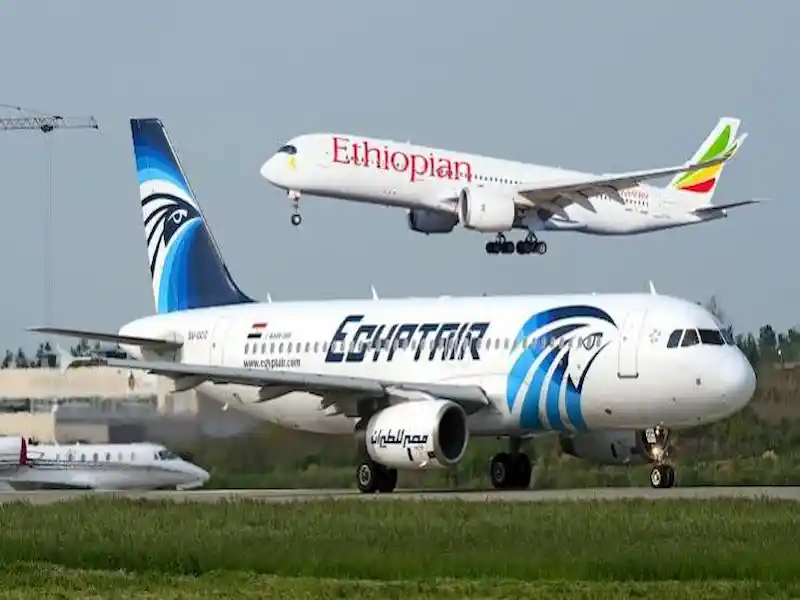
African airlines are adding seats faster than they are attracting passengers, highlighting a capacity-utilisation challenge even as demand for air travel across the continent recorded one of the strongest regional performances in July.
The International Air Transport Association (IATA), in its latest global passenger demand report, said traffic handled by African carriers increased by 6.4 percent in July 2026 compared with the same month last year.
However, airlines expanded available capacity by 9.0 percent during the period, leaving a significant gap between the growth in seats and passenger demand. Consequently, the passenger load factor fell to 74.1 percent, 1.8 percentage points below the level recorded in July 2025.
The development came as the global aviation market posted considerably weaker growth, with total passenger demand rising by just 0.2 percent year-on-year. Global capacity increased by 0.3 percent, while the industry-wide load factor stood at 85.2 percent, marginally lower than a year earlier.
Africa’s 6.4 percent expansion was surpassed only by Latin America among the major international regions, where passenger demand grew by 7.1 percent.
The figures underline the mixed picture facing African carriers as efforts to improve connectivity and respond to rising demand for intra-African travel continue. While stronger passenger traffic points to expanding market opportunities, the faster increase in capacity suggests that airlines are yet to fully translate additional seats into passenger growth.
IATA’s Senior Vice President, Sustainability, and Chief Economist, Marie Thomsen, said the global industry had largely benefited from the peak Northern Hemisphere summer travel season despite several pressures confronting airlines.
“The peak Northern summer travel season is a mostly positive story for air travel,” she said, noting that overall growth was achieved despite collective declines by carriers in North America and the Middle East.
Thomsen said traffic through Gulf hubs was continuing its recovery, while airlines remained confident about demand for the rest of the year.
She added that carriers were planning an almost three percent increase in seat capacity in September despite high fuel costs, economic uncertainty and geopolitical tensions.
Outside Africa, European airlines recorded a 3.1 percent increase in passenger demand in July, alongside a 3.2 percent rise in capacity, while their load factor stood at 87.1 percent.
International passenger demand globally declined by 0.1 percent during the month, although excluding Middle Eastern carriers, the market recorded 1.5 percent growth.














NYSC to Open Online Registration Portal for 2026 Prospective Corps Members in September

Again Residents Confront Scavenger Over Alleged Vandalism in Kosofe

GBB Reaffirms Digital Infrastructure Drive

Nigeria to Roll Out Unique Postcodes for Every Home October 1
