
AI
AI Can Help Nigeria Predict Traffic Congestion Before It Happens — Expert
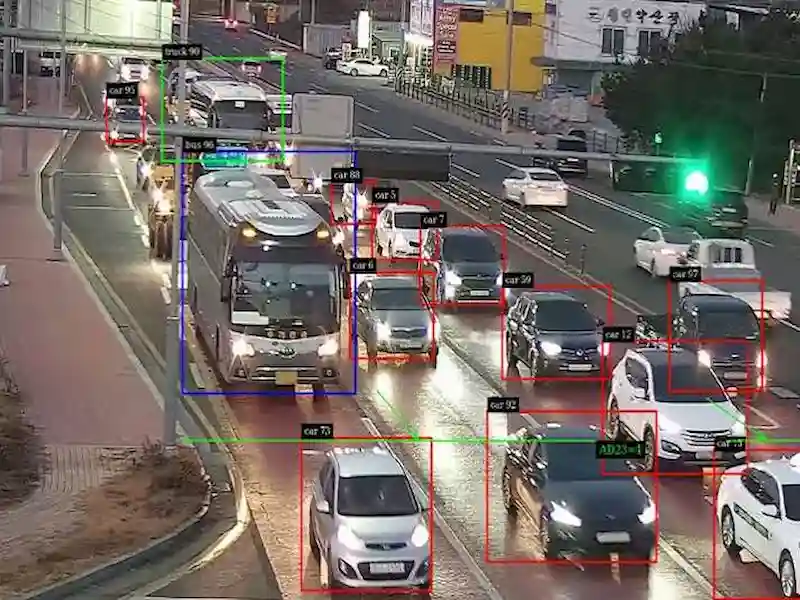
Artificial Intelligence can help Nigerian cities predict traffic congestion before it becomes a major problem, the Chief Executive Officer of Analaize, Mmadubuko Michael, has said.
Michael made the statement while speaking on how AI can be deployed to address persistent traffic congestion in Nigerian cities.
According to him, AI has the ability to process large amounts of information continuously and identify patterns that could indicate what is likely to happen before it develops into a major problem.
“AI basically allows us to process a large amount of information continuously, but identifies what is likely to happen even before it becomes a major problem,” he said.
He explained that instead of traffic authorities waiting until congestion occurs before responding, AI-powered systems could analyse information from different sources and provide early warnings.
Michael, however, identified the lack of reliable and comprehensive data as one of the biggest challenges to deploying effective AI solutions in Nigeria.
He said, “The biggest problem in achieving this is the lack of data. We don’t have data in Nigeria.”
Using Lagos as an example, he noted that traffic congestion can quickly worsen following incidents such as road accidents, broken-down trucks, rainfall, religious gatherings or major events.
He said AI should serve as an intelligence layer over existing transportation infrastructure rather than completely replacing the systems already in place.
According to him, Lagos is already moving in this direction through Intelligent Transport Systems, camera-based traffic management and digital enforcement.
He said the next step should be to make these systems increasingly predictive instead of simply using them to observe what is already happening on the roads.
Speaking on whether AI can predict traffic congestion before it occurs, Michael explained that an AI-powered traffic system could receive live information from thousands of vehicles, cameras and sensors.
He said such a system could detect how an accident on one road is likely to create a backlog on another road and provide authorities with sufficient warning to intervene.
“Instead of saying there is traffic at the Lekki-Epe Expressway, the AI system can say, based on current traffic volume, weather, historical patterns and an accident detected ahead, congestion is likely to become severe within the next 20 minutes,” he explained.
Michael said such predictive analysis could fundamentally change the way traffic authorities operate by moving them from responding to congestion to preventing or reducing its impact.
He stressed that data remains central to achieving this goal.
According to him, the process can be viewed as a continuous chain: data improves the AI model, the AI model improves prediction, prediction improves decision-making, decisions lead to interventions, and the results of those interventions generate feedback.
He said the system must continuously learn from what happens on the roads so that its predictions can become more accurate over time.
“This is a loop. It is a channel,” he said, stressing that continuous learning would be essential to building effective AI-powered traffic management systems in Nigerian cities.















NYSC to Open Online Registration Portal for 2026 Prospective Corps Members in September

Again Residents Confront Scavenger Over Alleged Vandalism in Kosofe

GBB Reaffirms Digital Infrastructure Drive

Nigeria to Roll Out Unique Postcodes for Every Home October 1
