
Politics
Obi Breaks Ranks With Atiku Over Fuel Subsidy, Says Removal Was Right
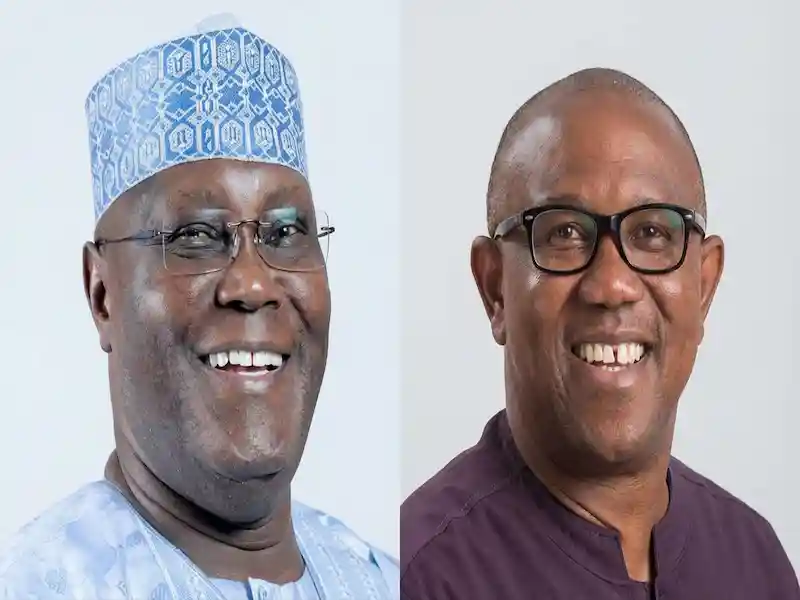
The Presidential candidate of the Nigerian Democratic Congress, Peter Obi, has broken ranks with the African Democratic Congress’ Alhaji Atiku Abubakar over the latter’s plan to reinstate fuel subsidy if he emerges victorious in the 2027 presidential election.
Speaking at the event, Obi blamed the Federal Government for mismanaging funds saved from the subsidy removal but insisted this was not sufficient justification for bringing the policy back.
He maintained that the removal itself remained the right decision and the real failure lay in how the government handled the resulting savings. He explained that rather than reverse the policy, the government should have provided citizens with alternative benefits from the recovered funds, adding that those very savings were now being squandered and diverted.
The former Anambra State governor noted that he had long proposed a structured framework for managing subsidy proceeds, pointing to his 2023 campaign manifesto as evidence of this position.
“I subscribe and maintain that we need to remove subsidy. Mismanagement of the proceeds should not be the reason for not removing it. What we should have done is that when we removed it, we should have given the people alternative usage for the subsidy. What we have today is that the removal and the attendant resources being recovered are also being mismanaged and stolen,” Obi said.
He added that his manifesto had already spelt out his position ahead of the 2023 election, stating that he had promised to manage subsidy removal in an organised manner and ensure that whatever was recovered would be invested appropriately.
President Bola Tinubu had announced the end of the petrol subsidy regime on the day of his inauguration in May 2023, a decision that immediately triggered sharp increases in petrol prices and stoked public anxiety over the rising cost of living. This backdrop shaped much of the debate among candidates in Port Harcourt as they staked out competing positions on how the country’s economic and security challenges should be addressed ahead of 2027.
Former Rivers State governor and ADC vice presidential candidate Rotimi Amaechi argued that economic recovery hinged on massive job creation, boosting local production, and policies that would put more disposable income in citizens’ hands. He cited his tenure as governor, during which his administration built more than 500 primary schools, over 300 health centres and more than 200 roads, alongside intelligence-driven efforts that drastically reduced crime. He further pledged that an Atiku-Amaechi administration would ensure equitable distribution of political appointments across the country, criticising what he described as the concentration of appointments under the Tinubu administration.
African Action Congress candidate, Omoyele Sowore, called instead for a wholesale change of government, insisting Nigeria’s security emergency could not be tackled under the current leadership. He also criticised the fuel subsidy regime, framing it as a policy that primarily benefited the elite rather than ordinary Nigerians. “If there is anybody that has been consistent in the removal of fuel subsidy, it has been me. The question about fuel subsidy is: who are you subsidising? You are subsidising the elite. You are subsidising the governors,” Sowore said.
On security, he was joined by Social Democratic Party candidate Adewale Adebayo in arguing that Nigeria required a change in leadership to tackle terrorism and other security threats, though Adebayo differed from most of the candidates on policing structure, advocating instead for a three-tier system involving federal, state and local government police.
Meanwhile former Cross River State governor, Donald Duke, insisted that leadership remained the central issue confronting Nigeria, arguing that getting the leadership question right would have a multiplier effect on other sectors, while condemning the influence of ethnicity in Nigerian politics and calling for reforms to strengthen the country’s presidential system.
Delivering the conference’s keynote address, titled “Policing in Transition,” Chief of Staff to President Tinubu, Femi Gbajabiamila, defended the administration’s proposed state police reform, describing it as a long-avoided issue the government had finally confronted. “Centralised policing without safeguards will bring about more chaos,” he warned.
He also explained that the reform was designed around a dual policing system meant to close existing gaps. Addressing fears that state police could be abused by governors against political opponents, he queried, “Who polices the police?”
He identified inadequate police manpower and deployment as major challenges, noting that Nigeria had about one policeman to every 650 people compared with an international benchmark of one to every 450, a situation he said was worsened by the deployment of many officers to administrative and escort duties rather than core policing responsibilities.
He stressed training, professionalism and institutional safeguards, insisting that police officers who rejected unlawful orders must be protected by strong institutions rather than mere assurances, even as he acknowledged that governors, as elected chief executives, must retain executive authority without the power to order the arrest of political opponents.










NYSC to Open Online Registration Portal for 2026 Prospective Corps Members in September

Again Residents Confront Scavenger Over Alleged Vandalism in Kosofe

GBB Reaffirms Digital Infrastructure Drive

Nigeria to Roll Out Unique Postcodes for Every Home October 1
