
AI
GITEX 2026: Nigeria Must Own Its Data and AI
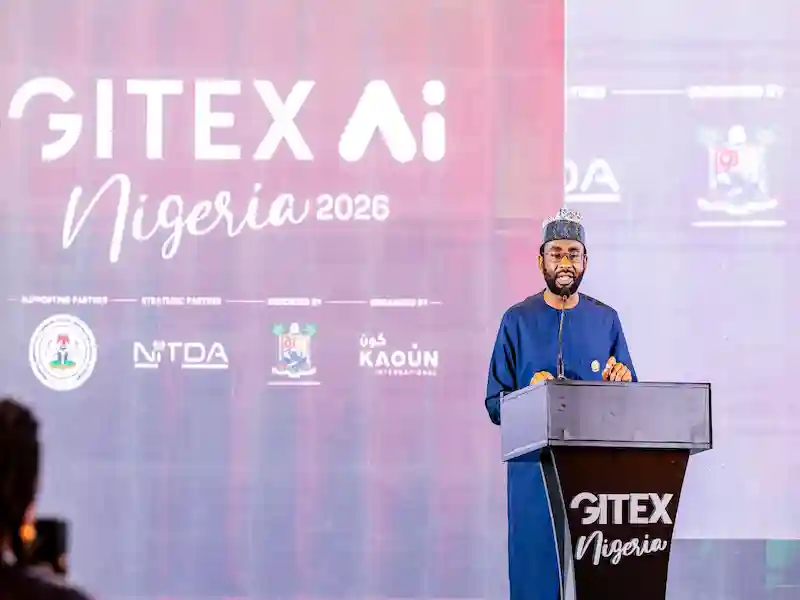
Expatriates, investors and government officials have converged on Abuja for the 2026 GITEX Nigeria Government Leadership and AI Summit, where discussions have centred on Nigeria’s digital sovereignty, local capacity building in artificial intelligence, data governance and cloud infrastructure.
The summit, which opened in Abuja under the theme “Beyond Connectivity – The Bridge to Sovereign AI & Innovation”, forms the first leg of GITEX Nigeria 2026, running across Abuja and Lagos until September 3. It is supported by the Federal Ministry of Communications, Innovation and Digital Economy in collaboration with the National Information Technology Development Agency (NITDA).
Several stakeholders at the summit raised concerns about AI sovereignty, stressing that while AI now cuts across sectors such as healthcare, financial services, and governance, Nigeria currently lacks adequate regulation and control over the systems it depends on. A major point of concern is that much of the AI technology used in the country remains beyond the reach of Nigerian regulatory authorities, with Nigerian data reportedly being used to train AI systems without adequate national oversight.
Kashifu Inuwa Abdullahi, Director General of NITDA, told the summit that artificial intelligence should no longer be viewed simply as another technological tool but as a matter of economic resilience, national security and digital independence for Nigeria. He said AI sovereignty must span the full technology chain, covering internet connectivity, computing capacity, data centres, cloud infrastructure, data governance and the AI models themselves. He also called on Nigeria to ramp up energy production to support the development of local AI systems and urged the pursuit of homegrown internet infrastructure to ensure the country remains at the centre of the management, control and exploitation of data from its own citizens.
Also speaking at the summit, the Chairman of the Senate Committee on ICT and Cybersecurity disclosed that two bills are currently before the National Assembly aimed at strengthening legal frameworks for the regulation of AI and related digital systems. He noted that the Cybercrime Act, already amended once, is undergoing a second round of amendments to capture new categories of fraud and offences that go beyond the scope originally covered by the law. He further stated that practices considered unacceptable in Europe and other advanced economies where AI systems are developed should not be tolerated in Nigeria or elsewhere on the African continent, adding that Nigeria intends to take a firm stance against such practices as it develops its own regulatory architecture.
Beyond the Abuja leg, GITEX Nigeria will move to Lagos on September 2 and 3 for the Tech Expo, Future Economy Conference and the newly introduced FDX Nigeria platform focused on finance and digital assets. More than 200 investors from 30 countries, collectively managing about $200 billion in assets, are expected to attend the Lagos segment, which will shift focus toward startups, entrepreneurs and the broader innovation ecosystem, as Nigeria positions itself to move from being primarily a consumer of imported technology to a producer of its own digital and AI infrastructure.














NYSC to Open Online Registration Portal for 2026 Prospective Corps Members in September

Again Residents Confront Scavenger Over Alleged Vandalism in Kosofe

GBB Reaffirms Digital Infrastructure Drive

Nigeria to Roll Out Unique Postcodes for Every Home October 1
