
Business
Nigeria’s Eonomic Recovery Meets The 2027 Test: Can Nigerians Feel The Gains?
For President Bola Ahmed Tinubu, the latest economic figures offer something his administration has long sought: evidence that the difficult reforms introduced since 2023 are beginning to reshape the Nigerian economy.
But beneath the improving numbers lies a harder question that could become central to the 2027 election: if the economy is growing, why are many Nigerians still struggling to afford the basics?
The evidence of recovery is becoming harder to dismiss. Nigeria’s real Gross Domestic Product (GDP) expanded by 4.43 percent year-on-year in the second quarter of 2026, accelerating from 3.89 percent in the first quarter and rising above the 4.23 percent recorded in the corresponding period of 2025. Agriculture and services strengthened during the quarter, although industrial growth slowed sharply compared with a year earlier.
The private sector is sending a similar signal, as the August Stanbic IBTC Bank Nigeria Purchasing Managers’ Index (PMI) rose to 54.3 from 52.5 in July, marking the seventh consecutive month of expansion.
More significantly, new order growth hit a one-year high, while output increased for the 21st consecutive month. Agriculture and manufacturing recorded particularly strong activity.
This suggests that the reforms are doing something important at the macroeconomic level. The removal of costly distortions, changes in the foreign exchange market, tighter monetary conditions and fiscal adjustments appear to have created a more stable environment for businesses and investors.
That improvement is also reflected in Nigeria’s latest assessment by Moody’s. The ratings agency last week revised Nigeria’s sovereign outlook from stable to positive while retaining its B3 rating.
Moody’s cited stronger external buffers, higher foreign exchange reserves, improved foreign exchange market functioning and stronger-than-expected economic growth.
The agency’s assessment is significant because it suggests that the reforms are being recognised beyond Abuja and the domestic market.
Yet Moody’s decision is not an all-clear signal. The B3 rating remains in place, reflecting continuing fiscal pressures, limited government revenue-generating capacity and weak debt affordability.
In other words, the direction of travel has improved, but Nigeria has not reached a position where its underlying economic vulnerabilities can be considered resolved.
The same distinction runs through the PMI figures. Businesses are receiving more orders and producing more, but employment is rising only modestly. August marked the 15th consecutive month of job creation, yet the rate remained muted, with wholesale and retail employment even declining.
More troubling for households is that the recovery is still accompanied by high costs. The PMI report showed purchase-cost inflation picking up in August, driven by higher fuel, transportation and raw-material prices. Companies responded by raising their own prices, with agriculture recording the fastest increase in charges among the monitored sectors.
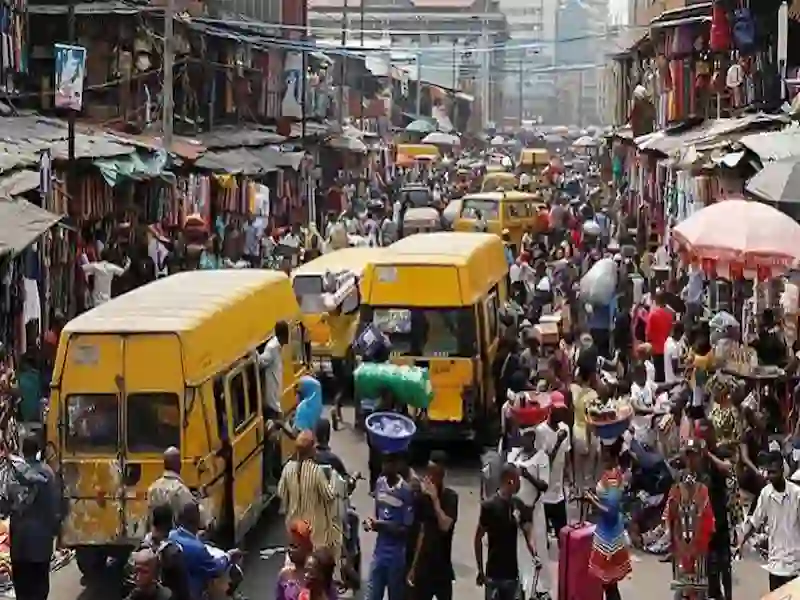
This is where the headline economic recovery meets the reality of the average Nigerian. Growth measures the expansion of economic activity, not whether a household can comfortably feed itself, pay rent, transport children to school or absorb rising business costs.
A growing economy can therefore coexist with financial hardship, particularly when prices remain elevated and employment growth is weaker than output growth.
Indeed, the PMI report itself points to this contradiction. While customer demand improved and companies became more optimistic about expansion, input prices continued to rise. Food prices had also maintained an upward trend for six consecutive months, even as headline inflation moderated.
That means the central economic story heading into the election year may not simply be whether Tinubu can point to GDP growth, stronger reserves or improved credit assessments. The more politically important question will be whether those gains become visible in household incomes, employment and purchasing power.
The administration can reasonably argue that it inherited an economy requiring painful correction and that the latest numbers show the correction is gaining traction.
The private sector’s sustained expansion, stronger GDP growth and Moody’s positive outlook provide evidence for the government’s argument that the reforms are beginning to restore the economy, but voters are unlikely to experience the recovery through all these. They will experience it at the filling station, in the transport fare, at the food market and when their landlords demand a higher rent.
For example, Petrol, which sold for about N185- N194 per litre before the subsidy was removed in 2023, now averages roughly between N1,300 to N1,600 per litre nationally, according to latest market data.
Also, The Nigeria Bereau of Statistics (NBS) Transport Fare Watch reported that the average fare paid by commuters for bus journeys within Nigerian cities rose to N1,431.25 per trip in May 2026, highlighting continued pressure on transportation costs.
The report stated that the average intra-city bus fare increased 2.43 percent from N1,397.27 recorded in April 2026. On a year-on-year basis, the fare rose 38.63 percent from N1,032.46 paid in May 2025.
For many households, the pressure is no longer an abstract economic argument. Speaking with National Focus, a resident in Ikotun area of Lagos state, Kehinde Ajibade, who works as a Secretary in a firm noted that her monthly take home of N120,000 lasts only about a week due to the rising cost of feeding, transportation, housing and other necessities.
Her experience captures the gap between Nigeria’s improving macroeconomic indicators and the reality facing households. Even as headline inflation has eased, rent inflation accelerated to 33.74 percent in July 2026, showing that some of the costs confronting families are still rising sharply.
A 2025 household spending survey also found that food and groceries were the most common major expense among respondents, followed by utilities, transportation and housing.
Even though the private sector’s has sustained expansion, seen stronger GDP growth and Moody’s positive outlook provides evidence for that argument, voters are unlikely to experience the economy through sovereign ratings or PMI readings. They will judge it through the price of food, transport, housing, electricity and other necessities, as well as their ability to find or retain jobs.
If GDP continues to rise without a corresponding improvement in living standards, this current administration may face a difficult political argument: that the economy is recovering on paper while Nigerians remain unable to feel the recovery in their pockets.
The evidence available today points to a genuine recovery, but not yet a broad-based improvement in welfare, therefore making the recovery incomplete.
The real test of Tinubu’s reforms will therefore be whether macroeconomic stability can be converted into cheaper food, stronger purchasing power, more jobs and a meaningful improvement in everyday life before Nigerians return to the polls.














NYSC to Open Online Registration Portal for 2026 Prospective Corps Members in September

Again Residents Confront Scavenger Over Alleged Vandalism in Kosofe

GBB Reaffirms Digital Infrastructure Drive

Nigeria to Roll Out Unique Postcodes for Every Home October 1
