
National
FG Targets 95% Digital Literacy by 2030, Plans Fibre-Optic Expansion to 774 LGAs

The Federal Government has reaffirmed its commitment to expanding Nigeria’s digital economy, targeting 95 percent digital literacy by 2030 while planning fibre-optic connectivity across all 774 Local Government Areas.
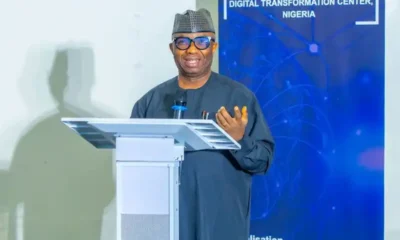
The Director-General of the National Information Technology Development Agency (NITDA), Kashifu Inuwa Abdullahi, disclosed this at the Global Tech Africa Conference in Kano, where he highlighted the government’s investments in digital skills, innovation financing and broadband infrastructure.
Speaking at the conference themed “Connecting Africa, Accelerating Growth,” Inuwa said the administration of President Bola Tinubu was advancing Nigeria’s digital economy through investments in human capital development, digital literacy, innovation and connectivity.
He identified the Three Million Technical Talent (3MTT) programme and Digital Literacy for All (DL4ALL) initiative as key components of the government’s strategy to equip Nigerians with relevant digital skills.
According to him, the DL4ALL programme targets 95 percent digital literacy by 2030, with efforts also underway to integrate digital skills into the formal education system.
The NITDA boss further disclosed that the agency was collaborating with the Japan International Cooperation Agency (JICA) and the Nigeria Sovereign Investment Authority (NSIA) to establish six startup funding facilities to strengthen Nigeria’s innovation ecosystem.
He said the Federal Government also planned to extend fibre-optic connectivity across all 774 local government areas to improve access to digital opportunities and support economic activities across the country.
On digital infrastructure, Inuwa explained that the National Sovereign Cloud Initiative was designed to build Nigeria’s domestic computing capacity, strengthen data sovereignty and position the country as a computing hub for West and Central Africa.
He also called for increased development of indigenous artificial intelligence solutions, expressing concern that Africa accounts for less than two percent of the data used in training AI systems.
Inuwa stressed the need for stronger collaboration among government institutions, universities, investors and businesses to translate research findings into market-ready innovations.
He further urged Kano to leverage digital technology and the African Continental Free Trade Area (AfCFTA) to restore its historic position as a major commercial hub connecting the Sahel with wider African and international markets.












NYSC to Open Online Registration Portal for 2026 Prospective Corps Members in September

Again Residents Confront Scavenger Over Alleged Vandalism in Kosofe

GBB Reaffirms Digital Infrastructure Drive

Nigeria to Roll Out Unique Postcodes for Every Home October 1
