
AI
AI alone cannot solve Nigeria’s food crisis — Tech expert
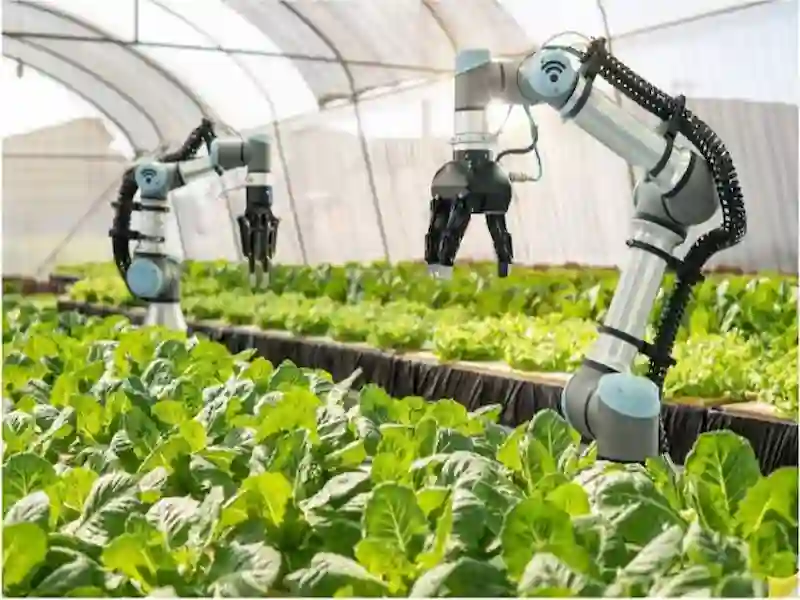
A technology expert, Mr. Aisosa, has said artificial intelligence and other emerging technologies cannot by themselves solve Nigeria’s food crisis, arguing that government policies, roads, transportation and access to electricity must first be addressed.
Aisosa made the remarks while discussing how technology can support agriculture and improve food production and distribution in Nigeria.
According to him, while AI has the potential to provide farmers with information and modern farming techniques, it cannot replace the basic infrastructure required to move agricultural produce from farms to markets and households.
He said, “AI will not create a policy that will prioritise or elevate the status of commercial agriculture to processing what will consume over what we export.”
He also questioned how technology could significantly reduce food prices when farmers in many communities still struggle with poor roads and transportation.
“Talk about accessibility, talk about roads, talk about transportation. The technology to do these is already on ground. That’s why I talked about leveraging what is on ground,” he said.
Aisosa cited farming communities in Edo State as an example, noting that many are located in interior areas where poor road networks make it difficult for farmers to transport their produce.
“AI advances will not fix roads for us. Most of the farming communities in Nigeria, in Edo State for instance, are in the interiors and the roads are not good. The roads are bad. AI will not fix these. Technology will not fix these. State policies, government policies and priorities on agriculture is what will fix these,” he said.
The technology expert, however, noted that technology could play an important role in helping farmers access information, weather forecasts and modern agricultural techniques.
He recalled that two decades ago, Nigerians who wanted to know the following day’s weather forecast had to wait for the main news before receiving the information.
“Twenty years ago, if you wanted to know the weather forecast of tomorrow, you would listen to the main news. After watching the main news today, you can see weather updates on your phone,” he said.
According to him, advances in technology have made such information more accessible, as weather updates are now available on mobile phones with internet access.
He said this development has also made the work of agricultural extension agents easier, as information on modern farming techniques can now be disseminated more quickly to farmers.
“Technology has so much tremendously advanced in the past two decades and it is now accessible. The weather updates is very much available in all phones now with an internet. So, modern farming techniques, the information is spread easily. The work of agricultural extension agents is so much easier now,” he said.
Aisosa stressed, however, that accessibility to agricultural technology depends on the availability of basic infrastructure and other necessities.
He explained that Nigeria has both subsistence and commercial agriculture, with subsistence farmers generally operating on a smaller scale and having limited access to funds, while commercial agriculture involves individuals or government entities with greater financial capacity.
He urged farmers, particularly those operating commercially, to invest in machinery and other tools that can improve productivity.
The expert said technology can be developed to address agricultural challenges, but such innovations may have limited impact if farmers lack electricity, good roads and transportation.
He said, “In Nigeria, if one doesn’t have electricity and roads, the technology can be created but cannot be useful because of the other necessary things that are not on ground.”
He therefore called for greater attention to government policies, infrastructure and investment in agriculture, stressing that technology should be leveraged alongside existing systems and infrastructure rather than treated as a standalone solution to Nigeria’s food crisis.















NYSC to Open Online Registration Portal for 2026 Prospective Corps Members in September

Again Residents Confront Scavenger Over Alleged Vandalism in Kosofe

GBB Reaffirms Digital Infrastructure Drive

Nigeria to Roll Out Unique Postcodes for Every Home October 1
