
Technology
FG to Deepen Nigeria’s Satellite Reach as NIGCOMSAT–2A, 2B Enter Next Implementation Phase
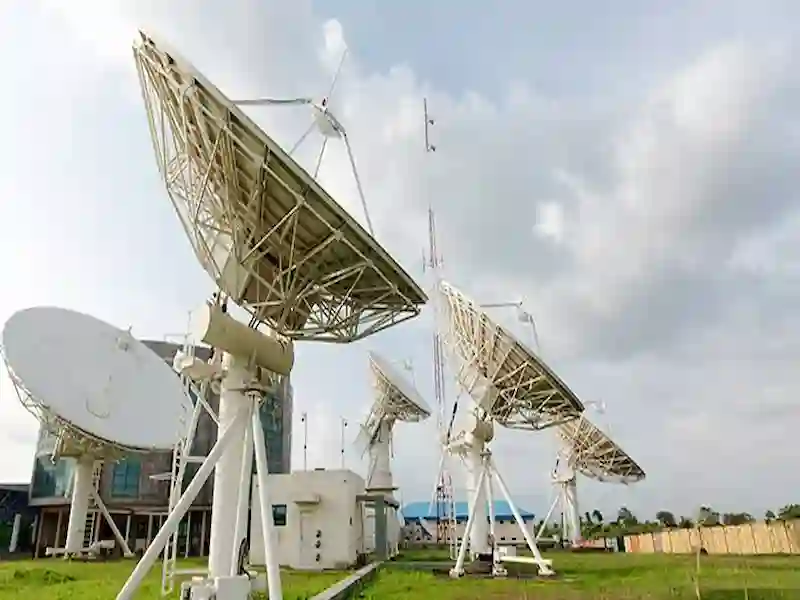
The Federal Government has disclosed plans to expand Nigeria’s satellite capacity and strengthen broadband, broadcasting, enterprise and critical communications services, as the acquisition and deployment of NIGCOMSAT–2A and NIGCOMSAT–2B move into their next implementation phase.
The planned deployment is expected to extend connectivity to underserved, unserved and hard-to-reach communities across the country, while strengthening national communications resilience and increasing Nigeria’s capacity to deliver satellite-enabled services to its citizens.
This was contained in a statement signed by the Acting Head, Corporate Affairs Division of the Nigeria Communications Satellite (NIGCOMSAT), Stephen Kwande, who noted that the development forms part of the Federal Government’s broader investment in digital infrastructure and national connectivity, in line with the objectives of President Bola Tinubu’s Renewed Hope Agenda.
According to the statement, the Managing Director and Chief Executive Officer of NIGCOMSAT, Jane Egerton–Idehen, said:
“This is a significant milestone for NIGCOMSAT and for Nigeria, and we commend President Bola Ahmed Tinubu for the leadership and support that have enabled us to reach this stage. NIGCOMSAT–2A and NIGCOMSAT–2B will strengthen our national satellite capacity, expand connectivity and support critical communications across the country. Our priority is to translate this investment into measurable value for Nigerians and position NIGCOMSAT for stronger impact within the global satellite and digital economy.”
The statement explained that the additional satellite capacity would support high-capacity broadband, broadcasting, enterprise connectivity, government services and other emerging digital applications. It added that the new capacity would also complement terrestrial broadband networks by providing wider coverage in locations where conventional infrastructure may be difficult or costly to deploy.
The deployment of NIGCOMSAT–2A and NIGCOMSAT–2B, the statement noted, is expected to enable wider access to reliable connectivity, particularly in underserved and hard-to-reach communities. It will also support access to digital services across education, healthcare, agriculture, financial services, broadcasting, enterprise and government services, while improving the resilience of communications infrastructure across the country.
The two satellites are also expected to strengthen secure and resilient communications for critical national requirements, including national security and defence, while reducing excessive dependence on external satellite infrastructure.
Beyond connectivity, the statement revealed that the deployment is expected to create opportunities across Nigeria’s satellite and digital technology value chain, including telecommunications, broadcasting, ground infrastructure, systems integration, technical support, satellite terminals and other satellite-enabled services. It will also support indigenous capacity development through knowledge transfer, local manufacturing, professional development and the growth of specialised expertise in satellite engineering, network operations, cybersecurity and other emerging space technologies.
The statement further disclosed that with the Federal Executive Council approval already secured, the acquisition and deployment process will now move into the next stage of implementation. This includes formal engagement with technology partners, contract finalisation, technical planning and other preparatory activities required for the manufacture, launch and eventual deployment of the satellites.
The satellites, according to the statement, will be delivered by Thales Alenia Space of France and Israel Aerospace Industries (IAI), with NIGCOMSAT leading implementation in collaboration with the Federal Ministry of Communications, Innovation and Digital Economy and other relevant stakeholders.
Through this investment, NIGCOMSAT is expected to expand its service capacity, strengthen the utilisation of national satellite assets and support the development of a more commercially viable Nigerian satellite and space-sector ecosystem.















NYSC to Open Online Registration Portal for 2026 Prospective Corps Members in September

Again Residents Confront Scavenger Over Alleged Vandalism in Kosofe

GBB Reaffirms Digital Infrastructure Drive

Nigeria to Roll Out Unique Postcodes for Every Home October 1
