
AI
Nigerian Innovator Builds AI-Powered “V2 glasses” to Help Blind People
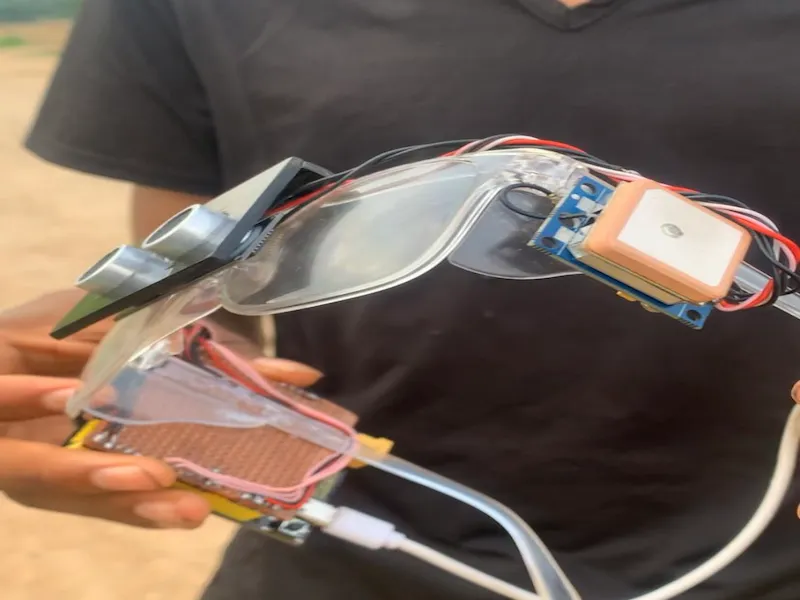
A Nigerian innovator, Khalifa Aminu, has developed an AI-powered smart glass system designed to help visually impaired people navigate their surroundings without relying on a cane or a human guide. The invention, named V2 Glasses, combines artificial intelligence, sensors, and GPS technology to detect obstacles, alert users to danger, and track their location in real time.
Unlike conventional smart glasses, which are typically built for entertainment or communication, Aminu’s V2 Glasses are purpose-built as an assistive mobility device for the blind. The system captures data through onboard sensors and a camera, then sends this data to a remote AI server for processing. The server analyses the information and sends a response back to the glasses in real time, allowing the device to function as an interface while the heavy computational work is handled remotely.
According to Aminu, a standout feature of the V2 Glasses is its GPS-based tracking and rescue capability. If a user becomes lost, the tracking system can determine their location from anywhere and relay that information to a designated carer’s phone via WhatsApp or email, giving families and guardians a reliable way to monitor and locate visually impaired loved ones.
Aminu explained the obstacle detection process in his own words:
“The glasses can detect objects in front of the user, such as cars, buildings, and other obstacles that could block a visually impaired person’s path. Once an obstacle is detected, the glasses trigger an alarm and vibration to alert the user, allowing them to move toward a clear space and continue walking safely.”
At the core of the device’s embedded hardware is the ESP32 microcontroller, which manages the IoT components of the glasses, including the sensors, GPS module, vibration motor, and alarm system. Because the ESP32 cannot efficiently run the required AI models, the glasses send data and requests to a remote server, where the actual AI processing takes place before results are transmitted back to the device.
One of the AI functions currently being developed is location-pattern learning. Aminu described how this works:
“At the moment, one of the AI functions is learning the user’s frequently visited locations. For example, if a visually impaired user repeatedly visits a particular location, the system can learn that pattern. When the user is travelling there again, the AI can recognise the destination and provide the relevant location information to the glasses.”
Aminu revealed that he is now working to push the project further by integrating AI and voice technology, giving the glasses the ability to speak with users and help them understand their surroundings more deeply. The planned upgrade will allow the AI to handle object recognition, text reading, and voice-based assistance directly through the glasses, moving beyond the current alarm-and-vibration alert system.
He disclosed that the idea for a voice-enabled version existed even before he built the current prototype, but rather than wait until he had the full resources to execute that vision, he chose to start with what was available and refine the prototype as much as possible. The V2 Glasses remain a prototype at this stage.
The invention was shared by Aminu on X, where he introduced the project to the public as an innovation he believes deserves wider global attention.



NYSC to Open Online Registration Portal for 2026 Prospective Corps Members in September

Again Residents Confront Scavenger Over Alleged Vandalism in Kosofe

GBB Reaffirms Digital Infrastructure Drive

Nigeria to Roll Out Unique Postcodes for Every Home October 1
