
Robotics & Automation
Nigeria Must Invest in AI Infrastructure or Risk Falling Behind — Ayoola

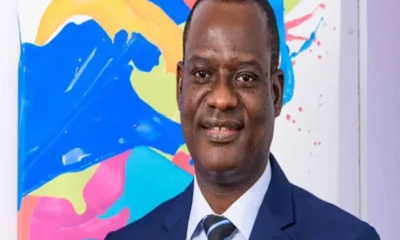
The Founder and Chief Executive Officer of Robotics and Artificial Intelligence Nigeria (RAIN), Dr. Olusola Ayoola, has urged the Federal Government to invest in artificial intelligence (AI) infrastructure, leadership training and local innovation, warning that Nigeria risks falling behind in the global AI race if urgent action is not taken.
Speaking during a telephone interview with National Focus, Ayoola said one of the biggest obstacles to AI and robotics development in Nigeria is the lack of knowledge among leaders and inadequate support for young innovators.
He noted that the country’s weak digital infrastructure, including data centres, reliable internet connectivity and stable electricity, continues to slow AI adoption.
“The best of infrastructure are outside the country data centers, reliable internet bandwidth and power supply you will hardly find that here.”
Ayoola explained that AI systems rely heavily on quality data, stressing that without reliable and real-time data collection, Nigeria will struggle to develop AI solutions that address real-world challenges.
“The issue of data, AI feeds on data so if you don’t have a mechanism for collecting correct real time and reliable data then your AI will not be able to have impact the real world.”
He also identified the high cost of importing robotics components as another major challenge. According to him, while many components are affordable, shipping costs often exceed the actual price of the items.
“Importation seems to be the challenge in robotics because not that the component are expensive but shipping fee alone sometimes is more than the cost of the component. You may want to order a simple battery and the battery may cost 3 dollar and the shipping fee will be 10 dollar so it means that we have to improve our shipping services.”
On concerns that AI could replace human workers, Ayoola dismissed the fear, insisting that the technology is designed to improve productivity rather than eliminate jobs.
“Most people will tell you that it’s going to take away their job.”
He acknowledged that some human rights advocates remain worried about the impact of AI on employment but maintained that such concerns are misplaced.
“AI is not here to make life difficult it’s here to make life easier it’s not to take away the jobs of those who have jobs but to make their jobs easier and more humane.”
Ayoola called on the government to partner with private organisations, provide funding for AI and robotics institutions, strengthen international collaborations and embark on nationwide public awareness campaigns to promote responsible AI adoption.
Looking ahead, he predicted that AI would become a standard tool across nearly every profession in Nigeria within the next decade. According to him, sectors such as accounting, education and engineering will increasingly integrate AI into their operations, while the growth of local manufacturing and improved logistics could significantly boost Nigeria’s robotics industry.
He added that as AI and robotics become more affordable and accessible, more Nigerians will embrace the technologies and benefit from their ability to improve productivity and reduce costs.










NYSC to Open Online Registration Portal for 2026 Prospective Corps Members in September

Again Residents Confront Scavenger Over Alleged Vandalism in Kosofe

GBB Reaffirms Digital Infrastructure Drive

Nigeria to Roll Out Unique Postcodes for Every Home October 1
